
Easel Cat-Mobile
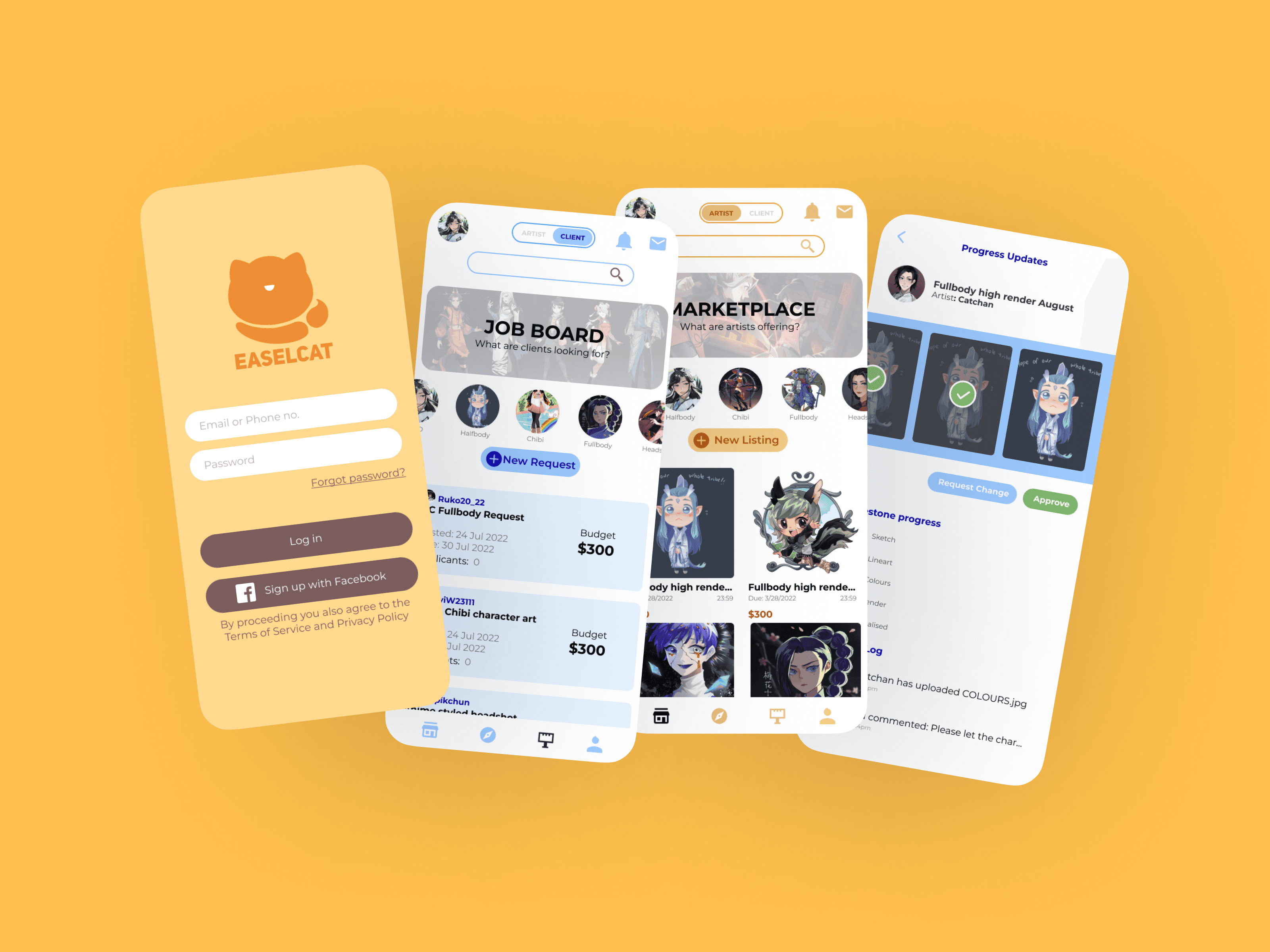
Streamlined commission platform facilitating smooth, efficient collaboration
Timeline
Jan 2022 - Jan 2023
Mobile App
Platform
Role
Product Designer
Introduction
Easel Cat app is a streamlined commission platform that connects clients with artists in a clear, efficient, and intuitive way. By simplifying communication, organizing project details, and supporting smooth collaboration from request to final delivery, it empowers both artists and clients to focus on the task at hand and build trust.
My Role
As the product designer, I worked on communicating with potential target users to seek their pain points on the current online art commissioning scene, as well as prototyping and designing the overall product
The Problem
The current landscape of art commissioning lacks a reliable and efficient platform that truly serves both artists and clients. Artists often struggle to reach potential clients, while clients face difficulty discovering creators who match their preferred style.
Goals
Simplify and streamline the art commissioning experience.
Create transparency and that fosters trust and creativity.
Design Process
For this project, our team engaged the Double Diamond Framework. EaselCat is a consumer centric product and hence it is important to understand thoroughly our target audience's pain points and iterate based on their feedback.
Final product and testing
Brainstorm to develop a solution that ease user’s burdens
Develop
Deliver
Discover
Define
Identify user’s pain points in this process
Research and understanding the art commissioning scene
Discover
Back in 2019, the online art scene was vibrant but lacking accountability and structure. There were frequent complaints about the conventional yet ineffective system of commissioning artists. We conducted survey with 109 content creators to find out what are their pain points with the current art scene on social media sites.
RESEARCH
User Interviews
We conducted survey with 109 content creators to find out what are their pain points with the current art scene on social media sites.
Competitor Analysis
We researched into existing sites like Mihuashi and Skeb that served the same function but to a different cultural demographic. (China and Korea)
Insights and Opportunities
Back in 2021, there was nowhere in the English online space for an app that serves this function. Yet the demand and transaction for commissioned artwork is very high.
CONCLUSION
Lack of trust between parties due to occasional acts of bad faith. Mental workload of managing commissions make the process slower for artists.
Mihuashi and Skeb have been flourishing in their respective geographical areas, proving that there is indeed a demand for this service among online art enthusiast
Users are willing to pay a premium to have the assurance their money will receive returns, and to have a more structured and organised commissioning experience.
Define
Strategy and ideation
Through the survey, we realised that what this community lack is a dedicated platform that bridges effective communication and discovery between the seller (Artists) and buyer (Clients) parties. There was a demand to have a dedicated and recognised platform for clients to find their ideal artist to commission, while relieving the administrative workload off artists’ shoulders so they can focus on creation instead. EaselCat’s creation is meant to solve these issues
User Personas

Jonathan
Jonathan is a fan artist active on Twitter. He loves drawing for others but due to his full time job, he struggles with administrative tasks like managing inquiries and tracking deadlines. The inefficient workflow makes him hesitant to open up commissions
Pain points:
Messy communication
Portfolio not reaching potential interested clients
Needs:
Effective and relevant commission tracking system
Exposure when opening commissions

Sarah
Sarah often commissions custom art for friends and herself. However, she finds the current process messy and inconsistent, often relying on messaging artists to coordinate. Sometimes the communication get lost or she forgets she commissioned someone.
Pain points:
Inability to find the right person with the right style for the job
Occasional lack of accountability from artists (Going missing, taking too long to finish work)
Needs:
Reliability and accountability from artists
Able to find desired styles
Develop
User Journey
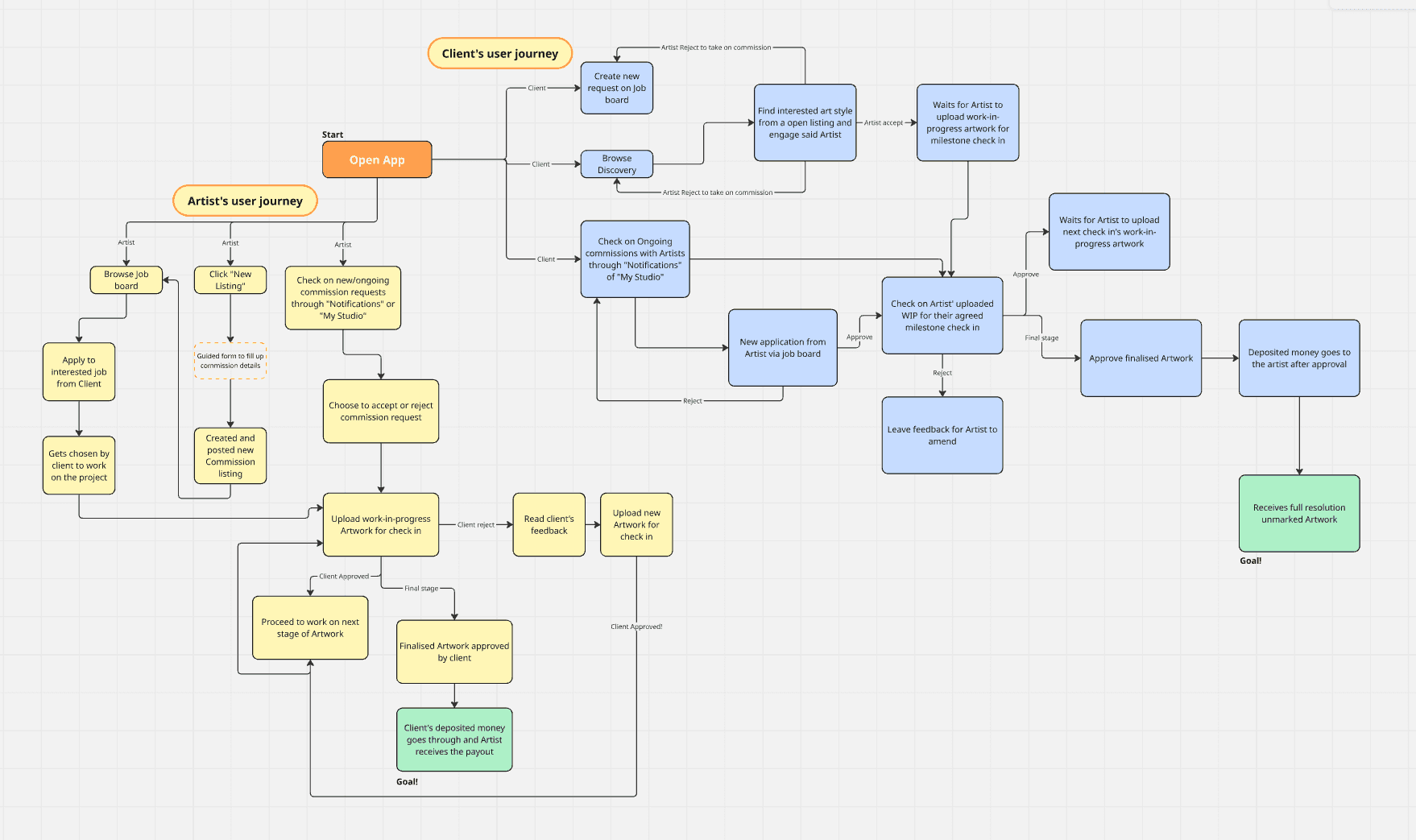
To kick off the developing process, we discussed and detailed down the process our users will take to reach their desired end goal. As much as possible, we want to tap into the users’ familiarity with existing social media platforms in order to reduce the mental clutter for onboarding something new. In other words, we want our user experience to be effective and simple.
Proposed Solutions 1: One App serving 2 audiences
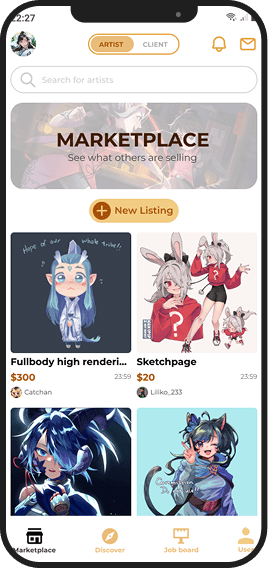
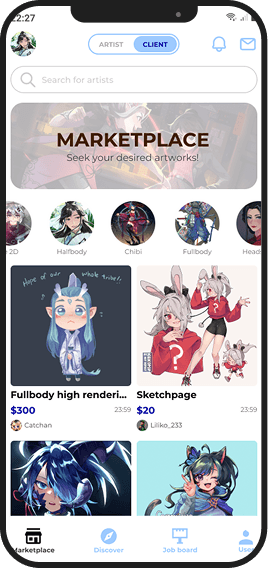
To create an ecosystem where both sides benefits, our goal is to design distinct feature sets for both Artists and Clients, yet maintain flexibility by ensuring users can still access and navigate the other profile type when needed. This ensures that artists get higher exposure to relevant audiences while Clients can seek their ideal artist to commission easier.
Clean interface for ease of navigation
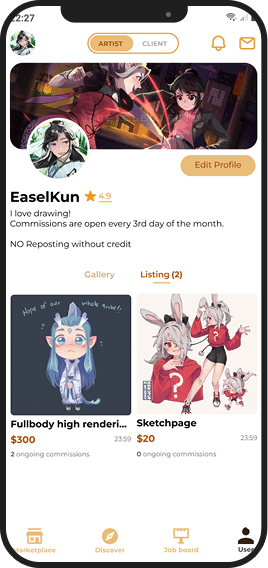
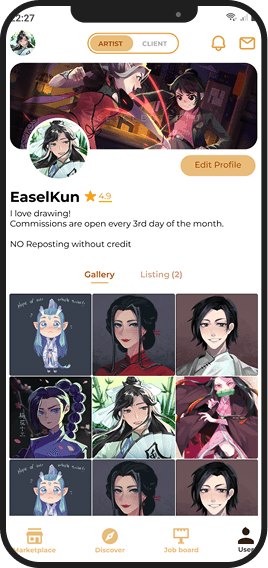
CTA button positioned conveniently for Artists to pitch their openings
Simplified navigation menu tailored to the 2 different roles
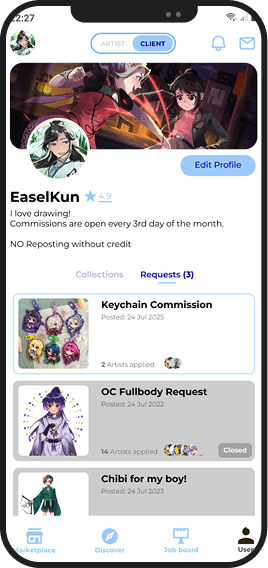
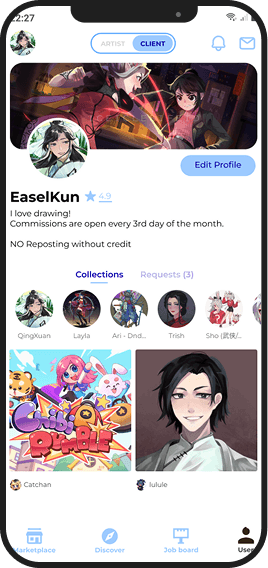
Quickly switch between Artist and Client mode. Modes are distinctively differentiated by colour schemes for easy recognizability
Gallery is dedicated to allowing artist to showcase their past commissions. This helps to build consistency and credibility of their drawing abilities and let potential clients find confidence when picking their desired artist to commission.
Listing allows artists themselves to quickly navigate to their ongoing projects. It also let potential clients who are interested in the artist’s works after viewing their gallery to quickly check if the artist has any openings for them to commission.
Artist Profile Page
Collection lets clients proudly showcase the commissions they’ve received. They can also sort their artworks into categories (character/genre etc) for easy organization. This makes it conducive for future artists to access character references, without the client needing to manually attach every image each time they submit a request.”
Requests is designed for clients who want to commission multiple artists. Instead of searching for artists individually, clients can post a request and allow interested artists to apply directly, saving time on their end if so they wish.
Client Profile Page
Proposed Solutions 2: Streamlined progress tracking
To minimize mental workload of having to sort through countless Direct Messages to find feedback and communication, we designed a progress tracker that will consolidate the back and forth process of approving the commission’s status with clear succinct steps to take for both Artists and Clients
Client Progress tracker
Easy viewing of their commission’s progress and direct channel to give feedback to artist
Client notified of new artwork uploaded by Artist
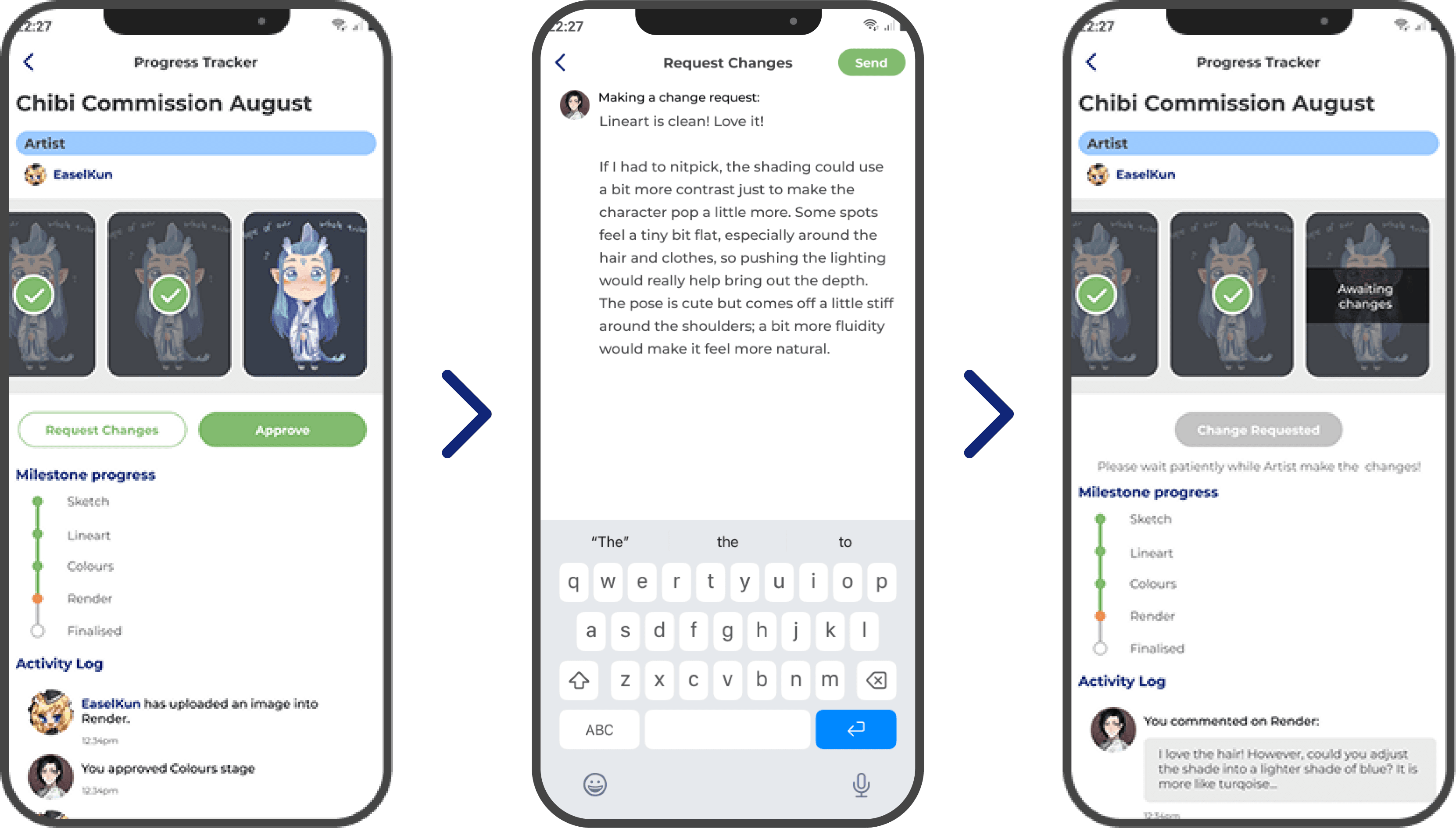
Client to make change request directly on the specific stage of progress
Client awaits new changes from Artist
One tap to upload latest progress, one tap to check on client’s feedback
Able to see previous check-in history
Clear indicator of current stage of commission
Activity Log keeping track of communications instead of using tradition DMs
Communication and feedback specific to the stage of the commission, leading to clearer understanding between parties
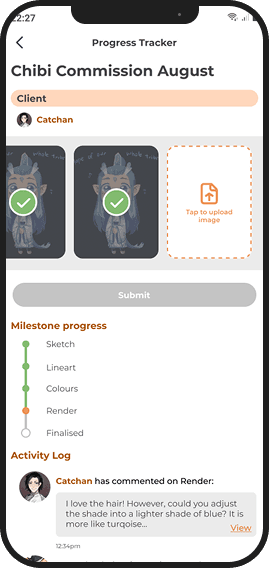
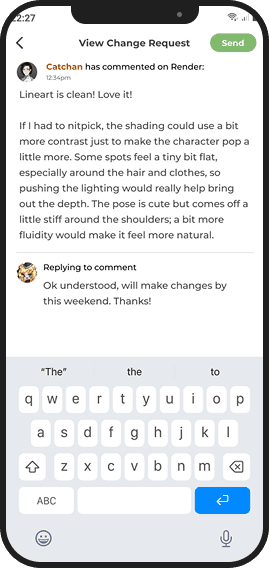
Artist Progress tracker
Proposed Solutions 3:Guided posting process
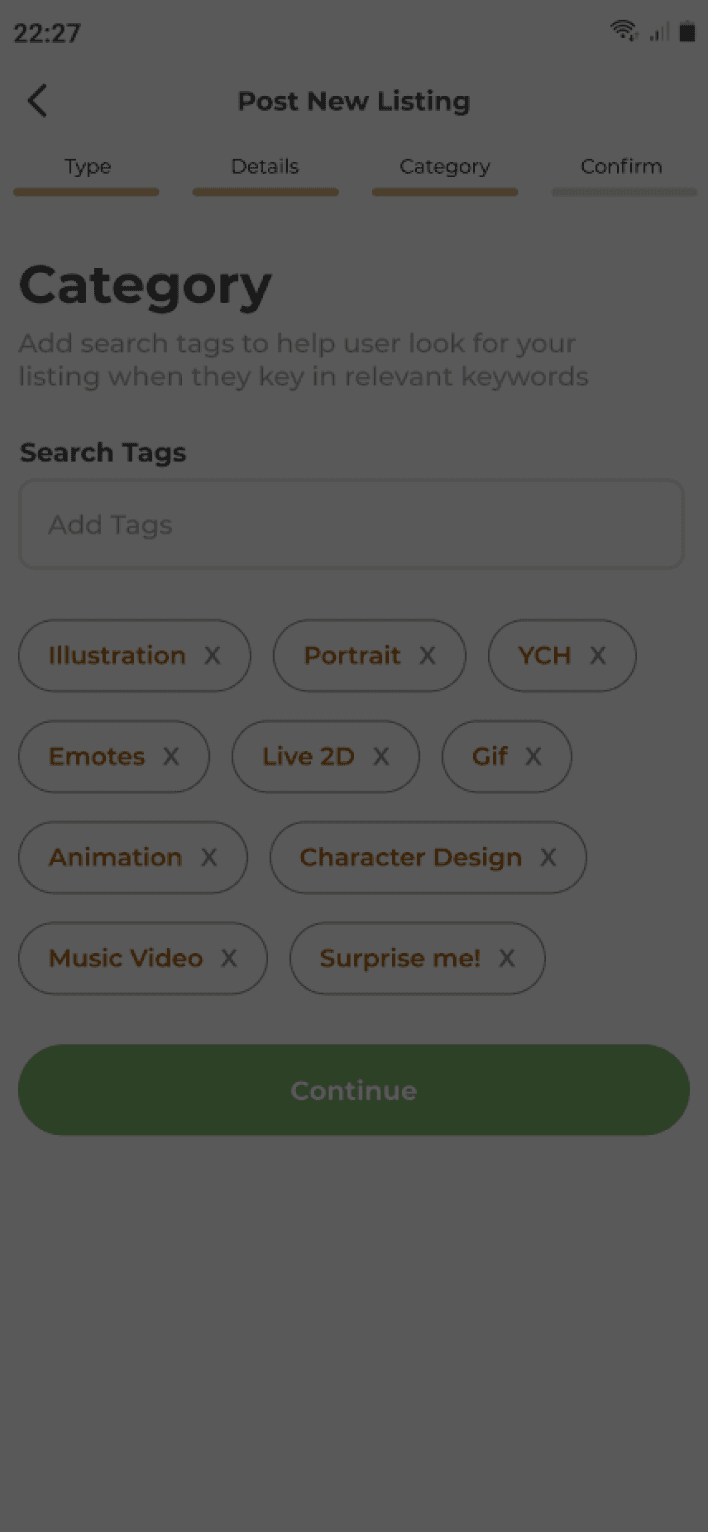
Posting up a commission will be structured and breakdown into 4 steps, with each step clearly guiding users to fill up the essential details that clients are most likely to be looking for when searching for a suitable artist.
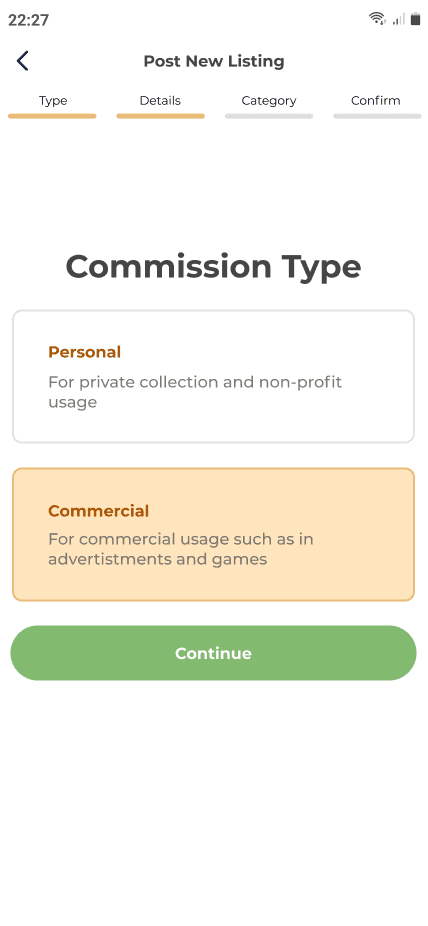

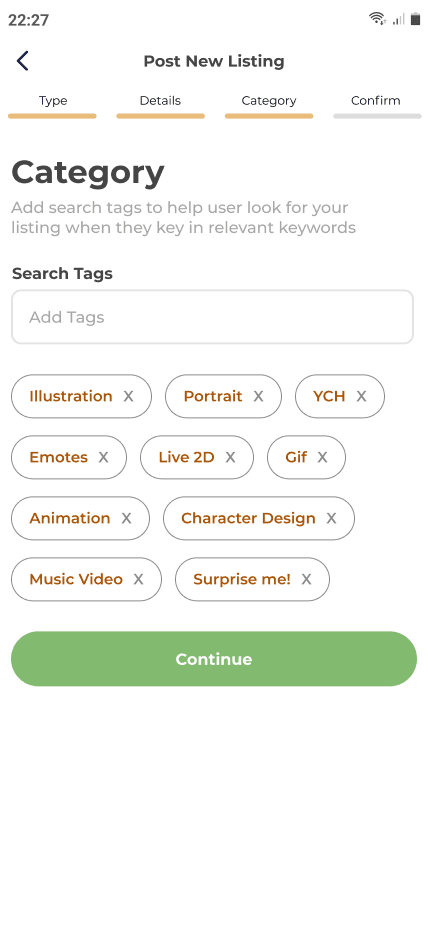

Save to Drafts
Would you like to save your progress and continue later?
Your commission listing is incomplete
Continue
Deliver
Testing and Interviews
We engaged 10 artists who frequently do commissions and 15 people who commission artists to test out EaselCat. Here are the notable feedback received that will affect future developments
The Good
Intuitive UI makes it easy to upload artworks and keep track of progress
Easy to navigate
Some Artist appreciate the ability to switch profiles (Artist ←→ Clients) as they commission art themselves too
The Bad
Artists generally prefer to have a tablet or web version of EaselCat instead since it is more convenient for their workflow (Draw and upload immediately through website.)
Takeaways
What Worked
There was thorough and comprehensive research done before the beginning of the project, leading to a smooth developing phase as we are clear on our main objectives.
Having close relations and frequent communication with our target audience was also helpful as they are enthusiastic and sincere with their feedback.
What can be improved
Initially, we were over ambitious and wanted to make the site akin to a full-fledged image-focused social media with comment and reposting mechanics. However, this proved to be more time consuming than originally intended and took focus away from the main purpose of the App, which is to be more like a transactional platform. We hence removed those features but valuable time could have been saved. This let us understand the importance of feature prioritisation and figuring out the essentials when designing for MVPs.